Individualized care, provided close to home
Holly Dushkin, MD, says, “The improved outcomes we’re achieving in breast cancer are directly related to our increased ability to tailor treatment to the specifics of each patient and her disease. That individualization of care typically begins with surgery, with lumpectomy or other breast-conserving surgery being an option for many women based on the location and extent of the cancer. However, the ability to customize care is even greater when it comes to the medical management of breast cancer, which generally follows surgery and sometimes is provided in conjunction with radiation therapy. In developing a treatment plan, we’re able to consider factors ranging from the tumor’s stage, hormone-receptor status, and genetic composition to the patient’s family history and overall health as we select from a wide range of therapies to implement an individualized treatment strategy.”
Dr. Dushkin, a board-certified medical oncologist who practices with RCCA in Chevy Chase, adds, “Options for medical management include targeted therapies, which act against a tumor’s specific genetic mutations; immunotherapy, which harnesses the power of the body’s own immune system to recognize and attack cancer cells; oral and intravenous chemotherapy; and hormonal treatments. The latest breast cancer treatment guidelines from the National Comprehensive Cancer Network, or NCCN, are 256 pages long.3 That is more than double their length from just a few years ago and reflects how much we’ve been able to identify evidence-based treatment strategies for different types and stages of breast cancer. And by the way, the NCCN’s 2023 guidelines had already been updated twice by March of this year – that’s how fast new treatments and approaches are being adopted.”
The RCCA oncologists add that advances in treating breast cancer have been accompanied by progress in delivering the latest therapies in community-based settings near patients’ homes. They explain that the innate stress of contending with cancer can be increased by having to travel a long distance to receive care, or by having to deal with city traffic and parking, and needing to navigate through a large hospital. By contrast, at community-based care centers such as RCCA’s locations in Chevy Chase, Clarksburg, Olney, and Rockville, people can receive the same FDA-approved agents and evidence-based, guidelines-recommended treatment strategies offered at academic medical centers in Washington, D.C.; Philadelphia; or New York. RCCA’s community-based care centers also offer access to dozens of clinical trials and cutting-edge diagnostics, including genomic assessments, in convenient, comforting settings where all staff members come to know each patient and the patient’s family very well.
*******
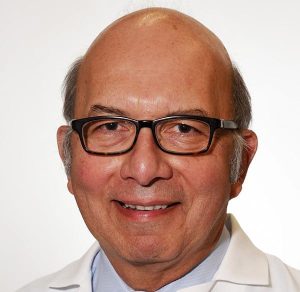
Drs. Smith, Bannen, and Dushkin – along with board-certified medical oncologists Frederick Barr, who practices at RCCA’s Chevy Chase office, and Chitra Rajagopal, who practices at RCCA’s Clarksburg, Olney, and Rockville care centers — are among the 90+ cancer specialists who treat patients at more than 20 RCCA care centers located throughout New Jersey, Connecticut, Massachusetts, and the Washington, D.C., area. RCCA oncologists and hematologists see more than 23,000 new patients each year and provide care to more than 225,000 established patients, collaborating closely with their patients’ other physicians. They offer patients the latest in cutting-edge treatments, including immunotherapies and targeted therapy, as well as access to a wide range of clinical trials. In addition to serving patients who have solid tumors, blood-based cancers, and benign blood disorders such as anemia, RCCA care centers also provide infusion services to people with a number of non-oncologic conditions—including multiple sclerosis, Crohn’s disease, asthma, iron-deficiency anemia, and rheumatoid arthritis—who take intravenously-administered medications.
To learn more about RCCA, call 1-844-346-7222 or visit RCCA.com.
References:
- American Cancer Society. Cancer Facts & Figures 2023. Available at https://www.cancer.org/research/cancer-facts-statistics/all-cancer-facts-figures/2023-cancer-facts-figures.html. Accessed March 25, 2023.
- American Cancer Society. Survival rates for breast cancer. Available at: https://www.cancer.org/cancer/breast-cancer/understanding-a-breast-cancer-diagnosis/breast-cancer-survival-rates.html. Accessed March 25, 2023.
- National Comprehensive Cancer Network. NCCN Clinical Practice Guidelines in Oncology (NCCN Guidelines®). Breast Cancer. Version 3.2023. March 3, 2023. Available at https://www.nccn.org/login?ReturnURL=https://www.nccn.org/professionals/physician_gls/pdf/breast.pdf. Accessed March 23, 2023.
Breast cancer diagnoses in women: Recent trends in Maryland
Location | Average annual count, 2015-2019 | Recent 5-year trend |
United States | 253,845 | Rising |
Maryland | 5054 | Stable |
Allegany County | 68 | Stable |
Anne Arundel County | 470 | Stable |
Baltimore City | 465 | Stable |
Baltimore County | 805 | Rising |
Calvert County | 74 | Stable |
Caroline County | 25 | Falling |
Carroll County | 151 | Stable |
Cecil County | 78 | Stable |
Charles County | 116 | Stable |
Dorchester County | 30 | Stable |
Frederick County | 203 | Stable |
Garrett County | 28 | Stable |
Harford County | 242 | Stable |
Howard County | 264 | Stable |
Kent County | 20 | Stable |
Montgomery County | 828 | Stable |
Prince George’s County | 717 | Stable |
Queen Anne’s County | 44 | Stable |
Somerset County | 22 | Stable |
Talbot County | 45 | Stable |
Washington County | 132 | Rising |
Wicomico County | 82 | Stable |
Worcester County | 60 | Stable |
Source: National Cancer Institute. State Cancer Profiles. Available at: https://statecancerprofiles.cancer.gov/. Accessed March 23, 2023.